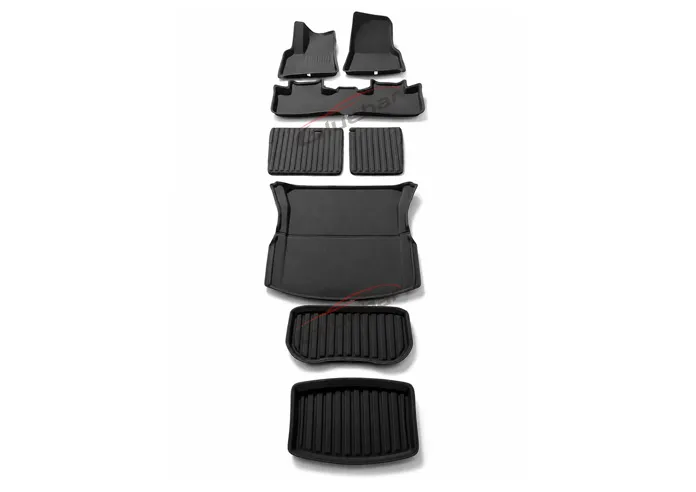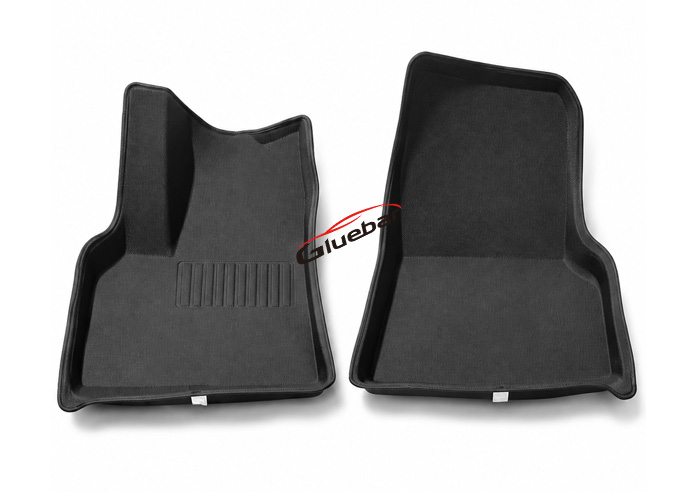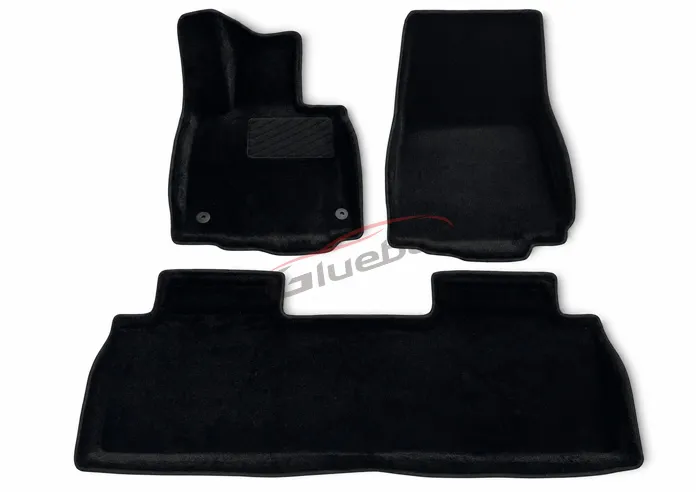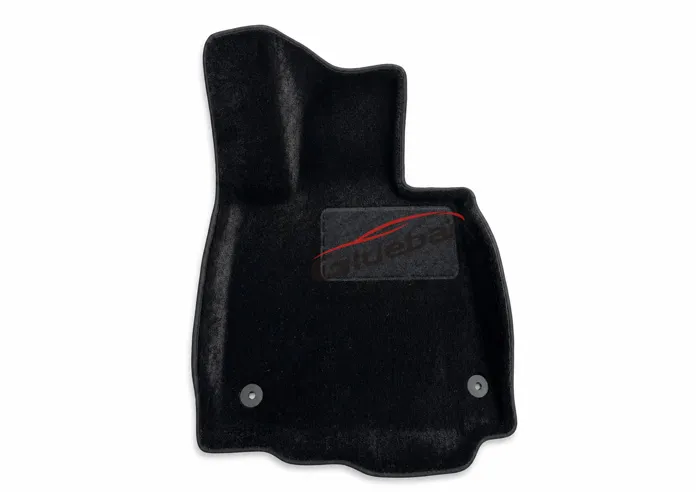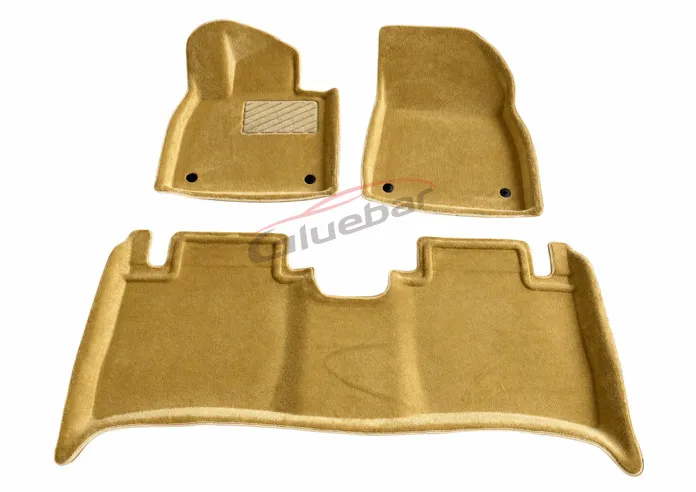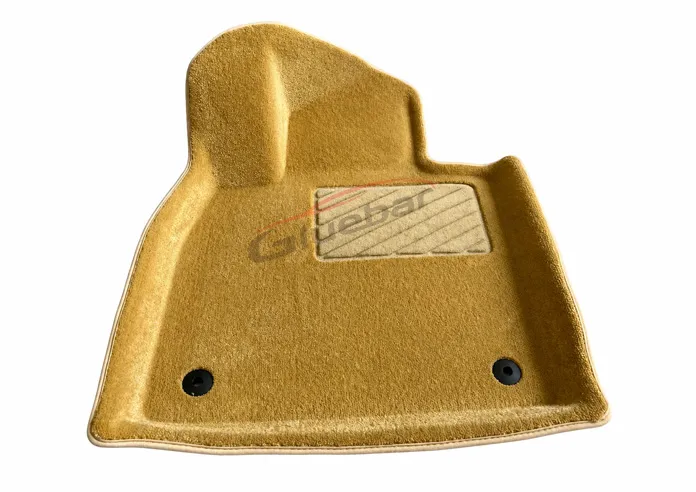

Are Electric Vehicle Floor Mats Really Just "Swapping the Model" Compared to Fuel Vehicle Mats?
Many people think that car floor mats have long been a mature product— It’s just about being waterproof, anti-slip, and durable, and as long as it fits the model, it’s fine.
However, in practice, more and more OEM clients and distributors have discovered: Electric vehicle floor mats can no longer be designed using the same approach as those for fuel vehicles. Though they all appear to be car floor mats, the underlying design logic has undergone significant changes.
1. The Floor of Electric Vehicles Is More Even, Making Car Floor Mats More Challenging to Design
In the era of fuel vehicles
There was a “default assumption” in car floor mat design:
- A raised central area
- A complex chassis structure
- The middle area of the rear seat was typically a compromised zone
As a result, many car floor mat designs were “adapted around the structure.”
However, electric vehicles are different.
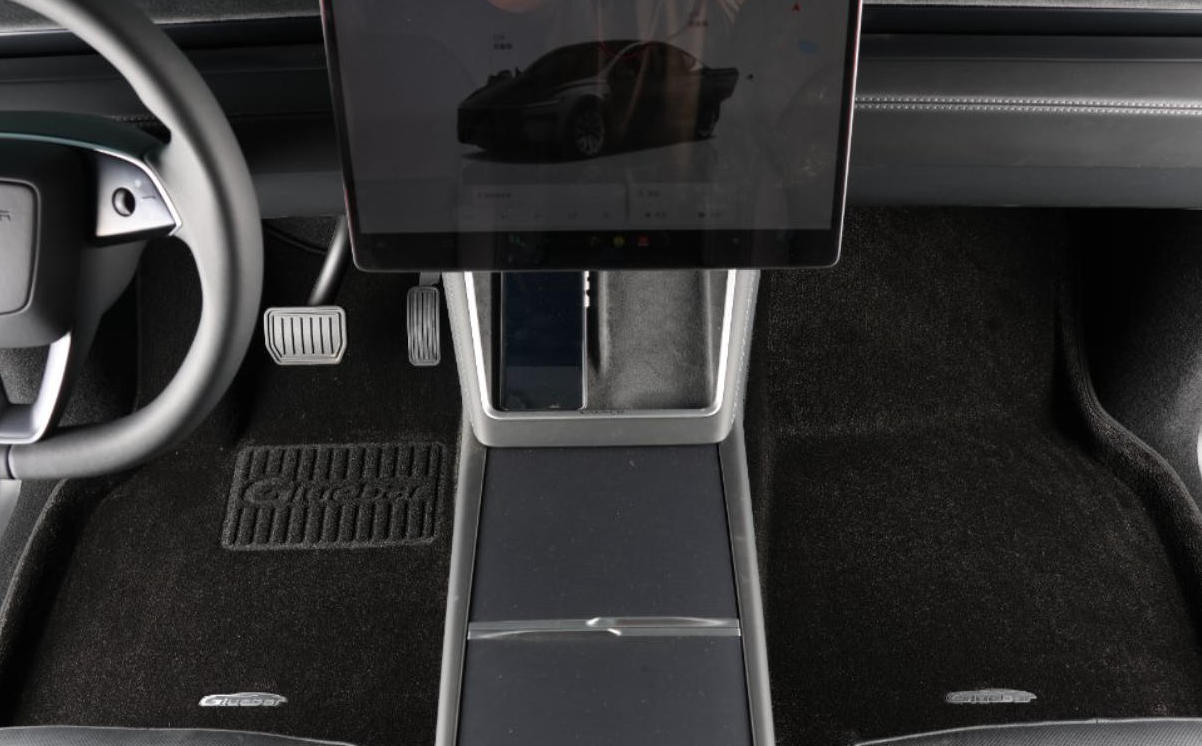
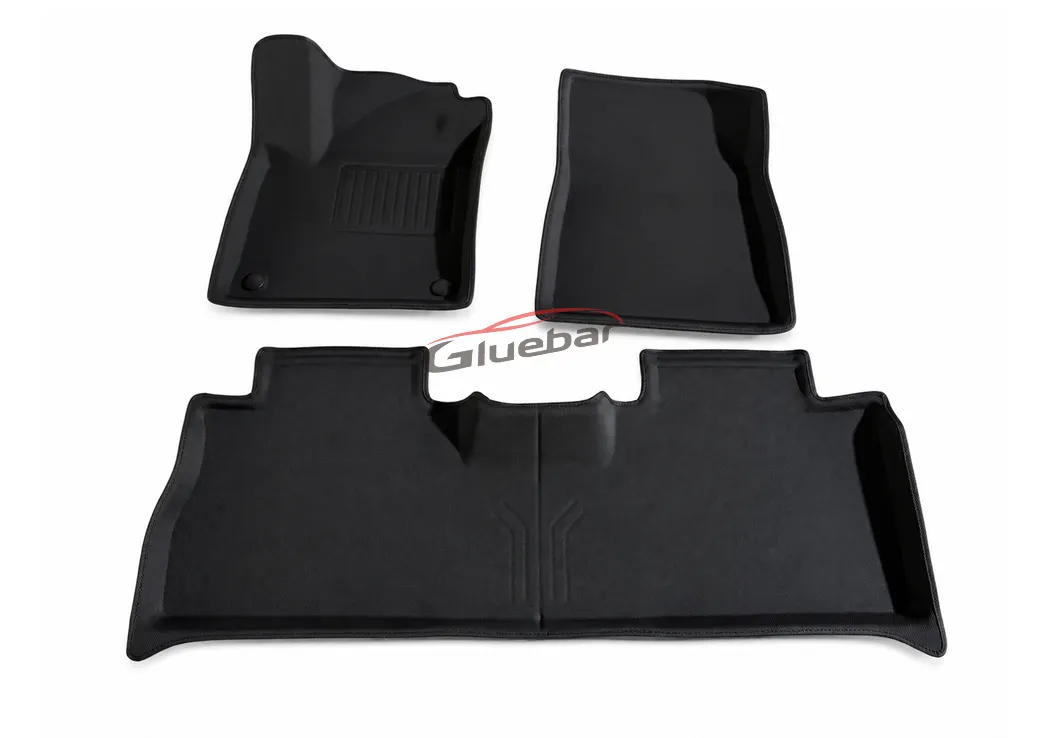
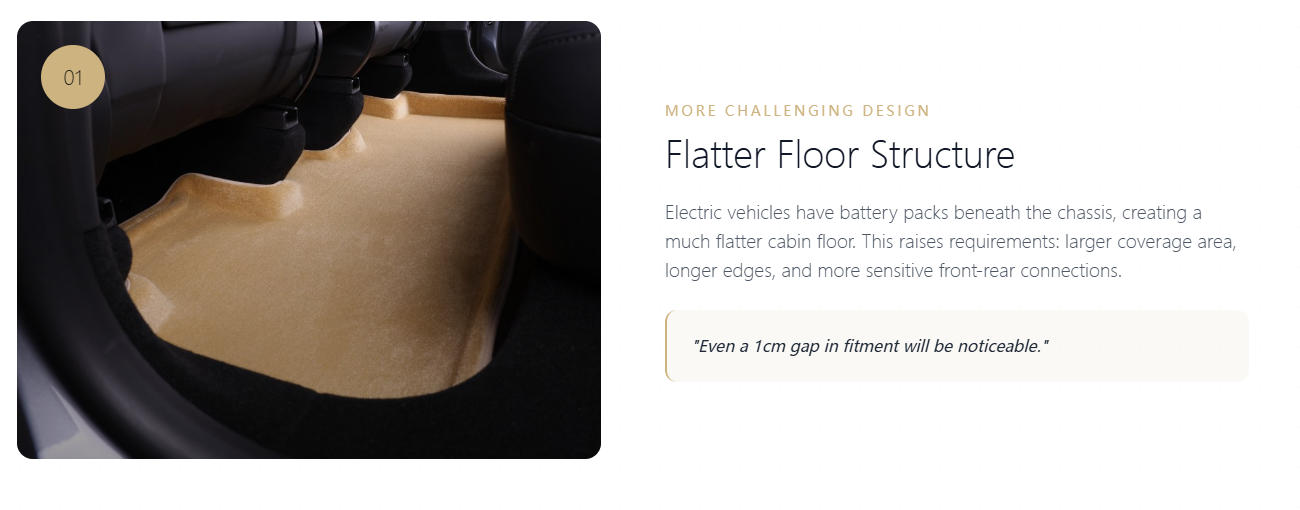
The battery pack is placed beneath the chassis, and the cabin floor becomes much flatter, making the space appear more organized. This, however, raises the requirements for car floor mats:
- A larger coverage area
- Longer edges
- A more sensitive connection between the front and rear rows
- Even a 1-centimeter gap in fitment will be noticeable.
This is why many fuel vehicle floor mat solutions, although seemingly similar in appearance, do not perform well in electric vehicles.
This structural difference directly determines that:
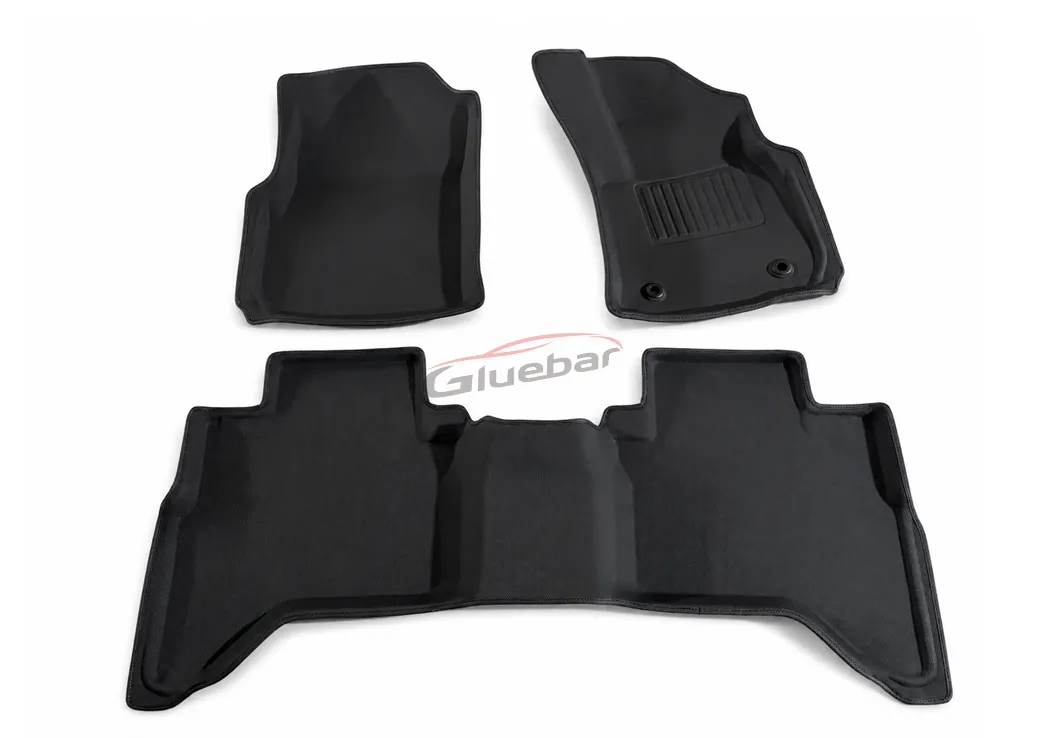
- The floor mat contours are not interchangeable
- The coverage area design approach differs
- The connection between the front and rear seats needs to be re-planned
As a result, electric vehicle floor mats rely more heavily on precise vehicle data and re-modeling rather than simple mold adjustments.
As a leading manufacturer, we provide a professional Custom EV Floor Mat Solutions that focuses on precise 3D scanning and custom modeling to address these specific EV structural challenges.
2. Electric Vehicles Are More “Picky” About Car Floor Mats
“If fuel vehicles are fine with car floor mats being ‘good enough,’ then electric vehicles are more like ‘no room for any small issues.’”
The reason is simple:
- Electric vehicles have more direct acceleration and braking
- The pedal area is more sensitive
- The cabin is quieter, making any unusual sounds or movement more noticeable.

This leads to several changes:
- Anti-slip design becomes more important than thickness
- Safety redundancy in the pedal area is compressed
- The fixed structure must be more reliable
In many electric vehicle projects, whether the car floor mat “slips a little” is no longer a matter of user experience, but rather a safety issue.
3. Materials Are Not Just "Eco-Friendly in Appearance" but "Built to Last"
In the era of fuel vehicles
The focus when choosing car floor mat materials was usually on:
- Cost
- Durability
- Thickness and appearance
However, this logic doesn't entirely apply to electric vehicles.

Why?
- Electric vehicle cabins are more sealed
- Users are more sensitive to odors
- Users have a more direct perception of the overall interior
This is why more and more electric vehicle projects are moving towards:
- Low-odor materials
- Structures that do not easily deform over time
- Surface designs that are easier to clean
The stability of materials has now become more important than just how thick the material looks at first glance.
4. As Users Change, the "Presence" of Car Floor Mats Changes Too
Electric vehicle users and traditional fuel vehicle users do not have exactly the same usage habits.
- Many fuel vehicle users can accept:
- Universal mats
- A slight misfit
- Replacing the mat once it gets worn out
However, electric vehicle users tend to care more about:
- Whether the mat is vehicle-specific
- Whether the edges are neat
- Whether it matches the overall interior style
This shift means that car floor mats are no longer just a “consumable”, but rather become a part of the interior system. Fit, structural integrity, and visual consistency have become the core criteria.
5. For OEM and B2B Projects, the Impact Goes Beyond Just the Product Itself
These changes ultimately lead to one practical question:
Can the floor mat solution for fuel vehicles be directly copied for electric vehicle projects?
In most cases, the answer is no.
For OEM and B2B clients
Electric vehicle floor mat projects usually mean:
- Earlier involvement with vehicle data
- More defined design for attachment methods
- Stricter testing and validation processes
Car floor mats are no longer "just a simple accessory to add later," but rather an integral part of the vehicle adaptation logic.
On the surface, a floor mat is still just a floor mat.
But what’s truly changing is the vehicle structure, user expectations, and usage environments.
The difference between electric vehicle floor mats and fuel vehicle floor mats is, at its core, not just a material upgrade, but a shift in design logic.
For OEM clients, distributors, and manufacturers, the sooner one understands this, the better equipped they are to succeed in electric vehicle projects.
Explore our Wholesale EV Floor Mat Manufacturing service for your next OEM or bulk project.