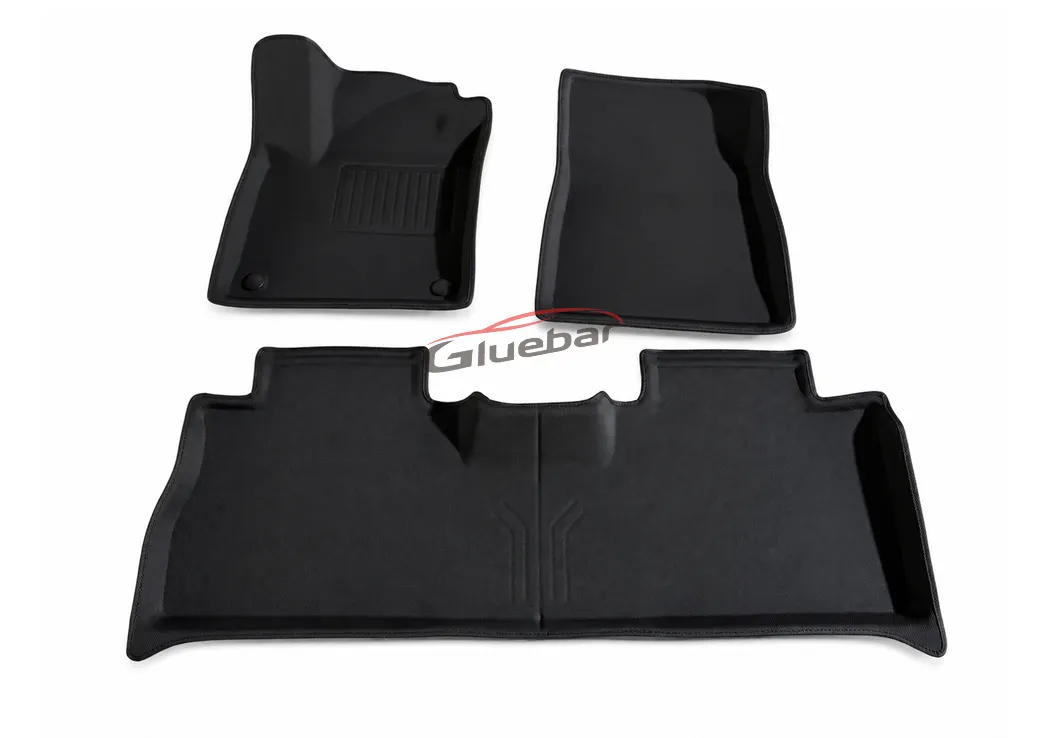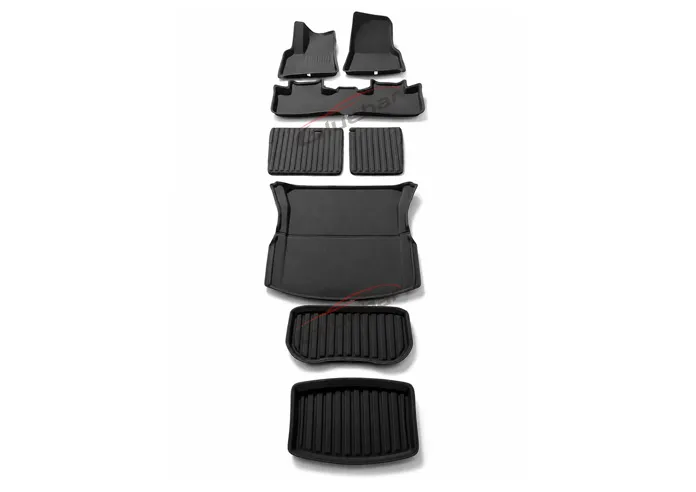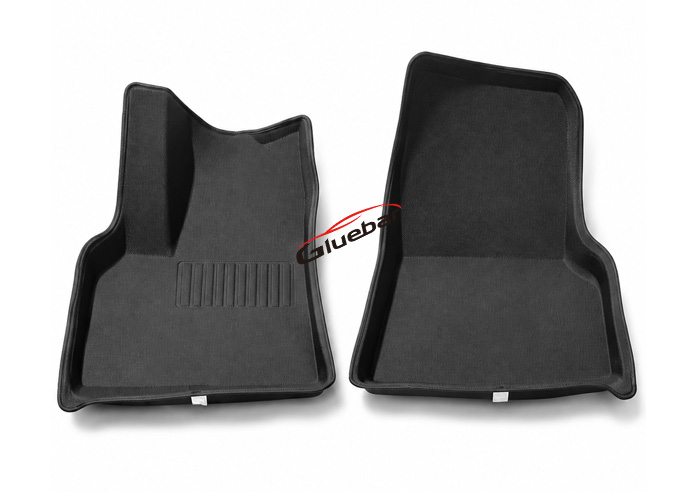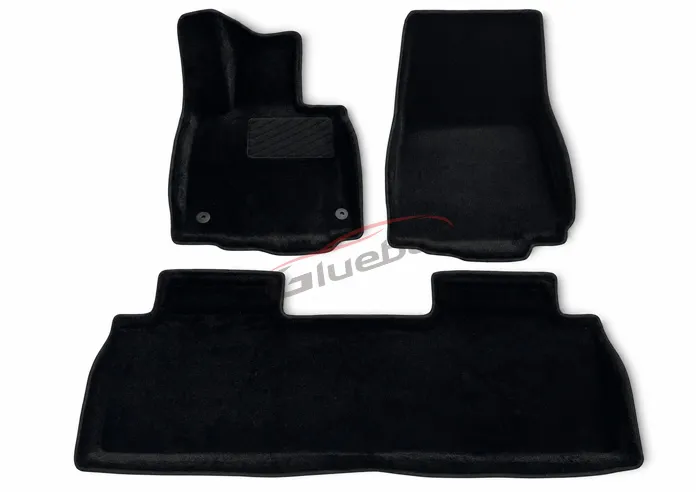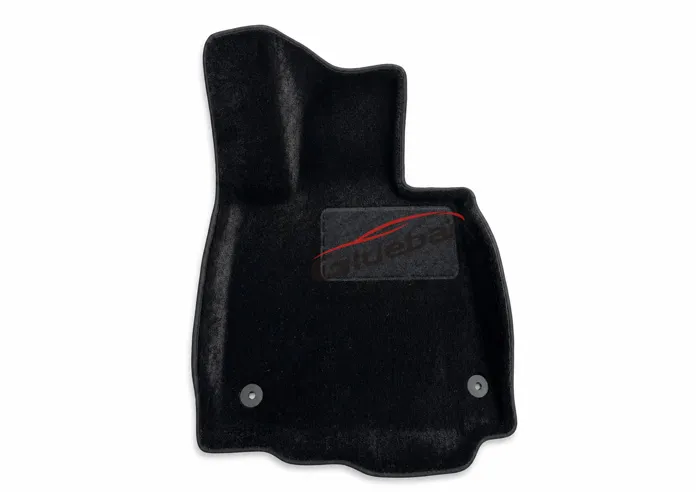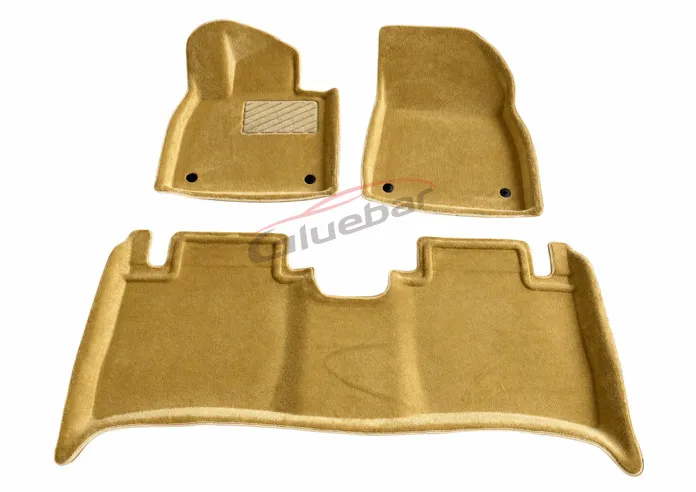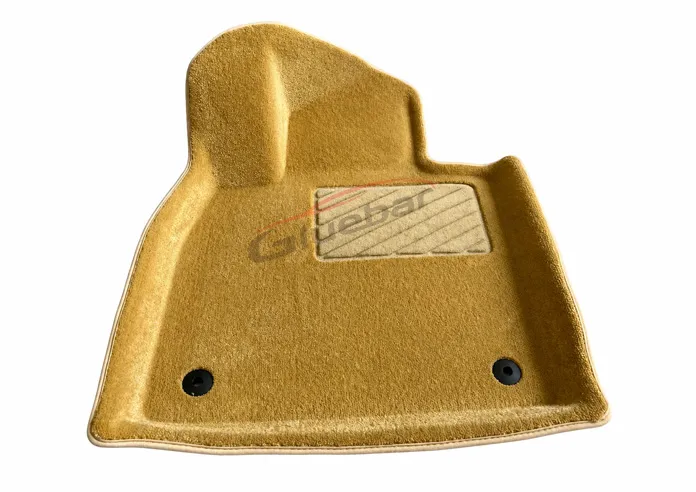
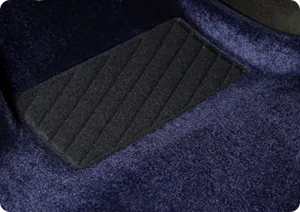
What truly determines whether a car floor mat iseasy to use, easy to sell, and well reviewedcomes down to one core factor:fitment accuracy.
How precisely a mat fits the vehicle floor almost directly determines a distributor’s sales performance and the end user’s real experience.
This article breaks down the full production process—from3D scanning to final molding—to explain why high-precision fitment is never achieved by simply “copying the shape.” Instead, it is the result of a complete, systematic technology chain.

Step 1: Professional 3D Scanning — Capturing 1:1 Original Vehicle Floor Data
The starting point of high-precision car floor mats isnot design and not mold making, butprofessional 1:1 3D scanning of the original vehicle floor.
The more accurate the scan, the higher the precision of subsequent modeling, mold development, and final forming—and ultimately, the better the fitment of the finished mat.
For professional car mat manufacturers,scanning is the most fundamental and critical stepin the entire process.
Why 3D scanning instead of manual measurement?
Manual measurement can only capture “key points,” but a vehicle floor is made up ofhundreds of curves, grooves, steps, and slopes. Achieving millimeter-level accuracy with rulers and tape measures is simply impossible.
Advantages of 3D scanning include:
-
High precision:millimeter-level sampling with no human measurement error
-
Full coverage:no small bumps, drainage channels, or slope angles are missed
-
True data representation:an exact digital replica of the real vehicle floor, not an “estimated shape”
-
More accurate downstream modeling:reduced CAD adjustment time and improved final fitment
This is why professional car floor mat factoriesmust conduct their own 3D scanning, rather than relying on manual measurements or third-party samples.
Types of data collected during scanning (structure, slopes, curves, protrusions)
A vehicle floor structure is far more complex than it appears. During 3D scanning, the following data is captured simultaneously:
-
Overall floor slope and height variations
-
Grooves, protrusions, and drainage channels in footrest areas
-
Curve transitions across left and right coverage zones
-
Hidden details beneath seats and around pedal areas
-
Clip hole positions and pedal boundaries
-
Center console cavities and inward sidewall contours
The more complete this data set is, the more accurate the subsequent CAD modeling becomes—and the more likely the mat will truly achievea snug fit with no curling, no gaps, and no sliding.
LHD/RHD and model-year differences must all be re-scanned
Even within the same vehicle model,significant invisible differencesexist across years and versions.
For example:
-
LHD (left-hand drive) and RHD (right-hand drive) floors are completely different
-
Facelifts may alter floor height, pedal geometry, or drainage channels
-
Different powertrains (ICE vs hybrid) can change front-row structures
-
Some models even havetwo floor versions within the same model yeardue to OEM tooling updates
Professional factoriesnever reuse old data or mirror left/right designs. Each year and each version is scanned independently to ensure a reliable database.
This is the fundamental logic behind high-precision fitment:
accurate data leads to accurate production.
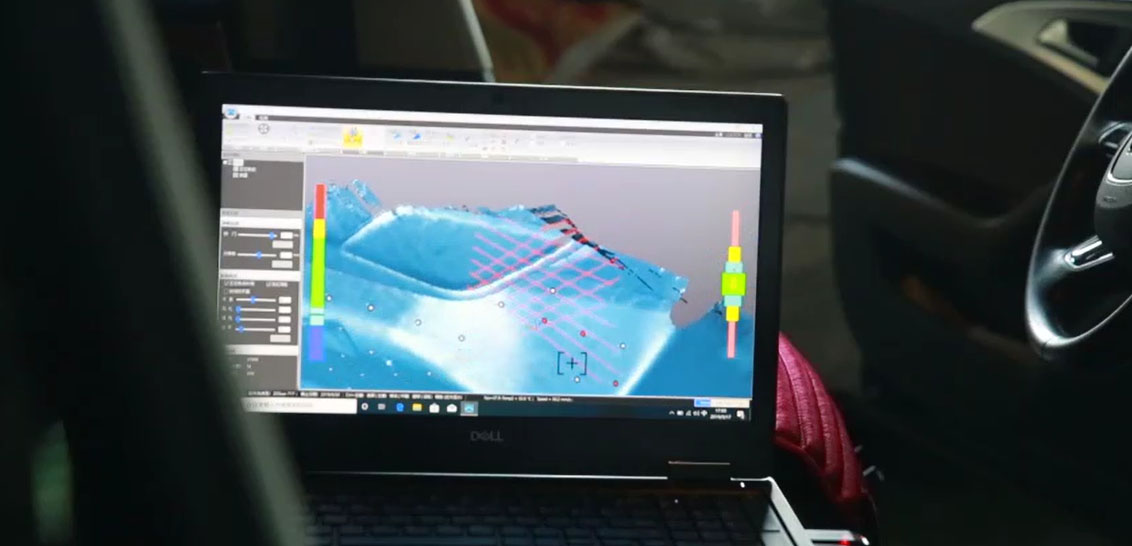
Step 2: Digital Modeling (CAD / CAE) — Defining Structure and Edge Design
3D scanning provides theoriginal vehicle data, but what truly determines fitment and functionality comes fromdigital modeling (CAD/CAE).
This step is not just about replicating the floor shape—it involves designing thickness, edges, structural strength, and user experience.
In many ways,modeling is the true dividing line between average and high-quality products.
Building a 3D car mat model from scan data
Engineers convert scanned point-cloud data into a fully editable 3D car mat base model, accurately reproducing all fit-critical details, including:
-
Floor slopes, curves, and convex/concave structures
-
Height transitions and movement zones in foot areas
-
Structural changes around pedals
-
Boundaries under seat rails
-
Dimensions and positions of fixing clips
Only ahigh-fidelity floor-matched modelcan ensure true 1:1 fitment in the final product.
Designing high edges, anti-slip zones, and drainage patterns
Once the base floor model is complete, engineers design the functional structure of the mat itself, including:
-
High edges:determining waterproofing and real leak prevention
-
Anti-slip zones:increasing friction under daily pedal use
-
Fixing clip alignment:must match OEM positions precisely
-
Drainage channels and grooves:improving cleanability and preventing water pooling
-
Front/rear layout harmony:avoiding leg interference or corner gaps
This isreal product engineering, far more complex than simply “opening a mold that follows the floor outline.”
Fitment is decided at the modeling stage—not later
Fitment accuracy isnot something mold technicians can fix by trimming or adjusting later.
Precision must be achieved during modeling by carefully refining:
-
Edge closure and surface conformity
-
Sidewall curvature and gap elimination
-
Pedal clearance safety
-
Seat-rail interference prevention
-
Absolute accuracy of fixing clip positions
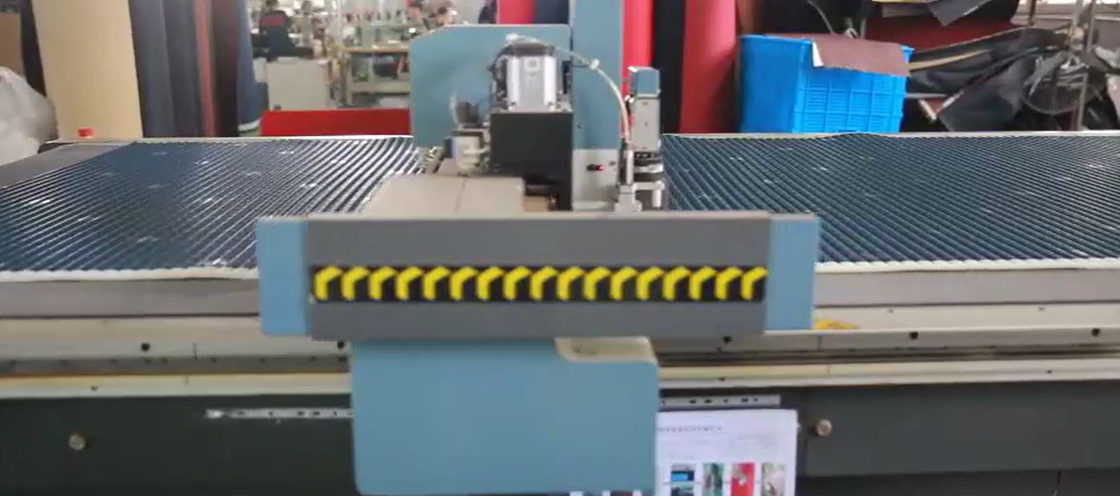
Step 3: Mold Development — Precision Defines Fitment
Scanning and modeling are preparatory steps. Turning digital models into mass-produced physical products depends entirely onmold development.
Molds are thefinal guarantee of fitment stability and product quality, and they represent one of the industry’s highest technical barriers.
CNC precision machining keeps mold tolerances extremely tight
All car floor mat molds are produced usingCNC machining centers.
Compared to manual or low-end equipment, CNC delivers unmatched precision:
-
Edge tolerances typically controlled within ±0.1–0.3 mm
-
Curves and slopes strictly follow scan data
-
Precise reproduction of protrusions, grooves, and fixing points
Higher mold precision leads to more consistent fitment—and eliminates batch-to-batch issues like “this shipment fits worse than the last.”
Mold structure has a major impact on TPE mat performance
Using the same TPE material in different molds produces completely different results.
Molds determine the final mat’s:
-
Edge height
-
Thickness transitions
-
Curvature radius
-
Sidewall rigidity
-
Floor-contact structural details
Poor mold design leads to the problems distributors fear most:
-
Curling edges
-
Collapsing walls
-
Poor fit
-
Pedal interference
-
Excessive deformation
In short:
the mold defines whether a car mat is good, stable, and truly fits.
Each vehicle requires independent mold development
Some ask:“Can one mold be used for different years or configurations?”
The answer isabsolutely not.
Because:
-
Different years = different floor structures
-
Different configurations = different fixing points
-
LHD vs RHD = completely different molds
-
Entry vs premium trims = structural variations
A professional TPE car mat factory with many supported models means:
-
A large proprietary scanning database
-
Fast internal modeling capabilities
-
Most importantly: acomplete and independent mold library
This is the real supply-chain barrier in the car floor mat industry.
Step 4: Hot-Press Integrated Forming of TPE Car Floor Mats
The final shape of TPE car floor mats is achieved throughhigh-temperature hot-press integrated forming.
This step directly determines whether the mat remains stable, maintains fitment, and performs well throughout its lifecycle.
Hot-press forming ensures structural stability and shape retention
Under high temperatures, TPE softens and is pressed into the mold under hundreds of tons of pressure, forming its final shape.
This process ensures:
-
Consistent edge height
-
Perfect conformity to vehicle curves
-
Long-term resistance to collapse or deformation
This is why premium manufacturers insist on hot-press integrated forming instead of simple cutting or assembly.
Material rebound and mold design jointly control edge straightness
Edge curling and collapsing issues often result frompoor coordination between material properties, mold design, and hot-press parameters.
Professional hot-press systems ensure:
-
Rigid, upright edges
-
Smooth thickness transitions without wave patterns
-
Long-term shape retention
In other words,hot-press quality directly shapes first impressions and long-term user evaluations.
Automated production improves consistency and reduces batch variance
Hot-press temperature, pressure, and timing are all precise parameters. Automation ensures:
-
Minimal dimensional variance between batches
-
Consistent edge heights
-
Stable surface finish quality
-
No “this batch is fine, the next one shrank” issues
Batch inconsistency is a distributor’s nightmare—and automation is the solution.
Cooling and setting determine durability and long-term stability
Immediately after hot pressing, mats enter the cooling-and-setting stage—this is where the structure is “locked in.”
Proper cooling ensures:
-
No rebound or deformation
-
Stable, closed edges
-
Long-term fitment retention
-
No compression deformation during transport or stacking
Insufficient cooling can cause subtle deformation during storage or shipping, creating hidden after-sales costs for distributors.
Step 5: Quality Inspection — Fitment Is Not a Matter of Luck
Many distributors ask:
“Why are some factories’ mats always stable while others never fit consistently?”
The difference lies in thequality inspection system.
Professional factories perform multiple inspection rounds before and during mass production to ensure stable fitment, low odor, and deformation resistance—by process, not by chance.
Dimensional inspection: symmetry and fixing-point accuracy
A 1–2 mm deviation may seem small, but it can cause:
-
Fixing clips to misalign
-
Edge compression against interior trim
-
Mat slippage
Professional factories performdimensional scan comparisonsbefore each production batch to ensure:
-
Left/right symmetry
-
Accurate clip positions
-
Edge profiles match the model
-
No length or width distortion
This determines whether the mat installs smoothly.
Temperature resistance testing: stable in extreme climates
Global markets experience extreme conditions:
-
Canadian winters: –30°C
-
Middle Eastern summers: interior temperatures up to 60°C
TPE car mats must remain stable under both extremes:
-
No hardening or cracking at low temperatures
-
No softening or deformation at high temperatures
-
No edge curling or collapse
Only temperature-tested mats are suitable for global export.
Wear and anti-slip testing: directly impacts safety and repurchase rates
Poor wear resistance or anti-slip performance can lead to:
-
Driver-side abrasion
-
Worn-down surface textures
-
Safety risks from mat movement
Therefore, friction coefficient testing, abrasion cycle testing, and surface durability testing are essential to ensure long-term safety and durability.
High-Precision Car Floor Mats Are Engineered—Not Imitated
3D scanning + modeling + molds + hot pressing + QC = high fitment
The core competitiveness of high-precision car mats has never been about “copying someone else’s product.”
It depends on a complete technology chain:
Original vehicle scanning → digital modeling → precision molds → TPE hot-press forming → systematic QC
Every step determines fitment accuracy, stability, and user experience.
The more mature the technology, the higher the fitment—and the fewer returns
Fitment is not judged by feel or experience alone—it is built on data, models, and production capability.
Better technology → smaller tolerances
Smaller tolerances → more stable products
More stable products → fewer after-sales issues
This is the most real and universal need of global distributors.
This is why Gluebar delivers stable fitment and low return rates
Gluebar has gained increasing attention from car floor mat distributors worldwide in 2025 and continues to expand across Europe, the Middle East, and Southeast Asia because:
We do not produce“visually similar”mats.
We producetechnology-driven, high-fitment, low-after-sales car floor mat products.
From scanning to molds, from process control to QC, every step follows global standards—giving distributors confidence and end users lasting trust.